Gyana Yoga – The Path of Knowledge
Gyana Yoga, literally “the path of knowledge,” is one of the four principal paths of yoga described in the Vedic tradition. Alongside Bhakti Yoga, the path of devotion; Karma Yoga, the path of selfless action; and Rāja Yoga, the path of meditation and discipline; Gyana Yoga leads the seeker toward direct realisation of the highest truth.
Gyana is not merely intellectual understanding. It is wisdom turned inward, knowledge transformed into self-awareness. True teaching arises when insight is lived, for those who apply wisdom to themselves naturally radiate it to others. The ultimate aim of Gyana Yoga is to realise the non-dual truth that the individual Self, the Ātman, is one with the universal consciousness, Brahman.
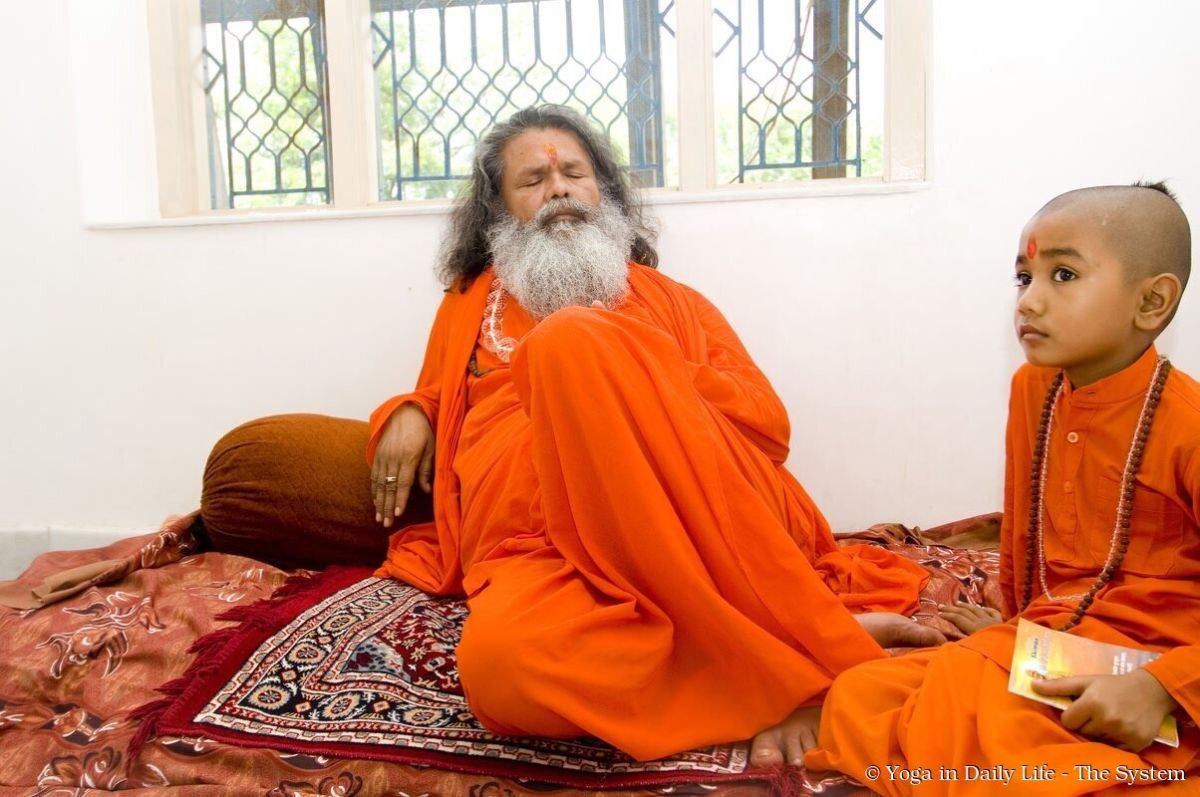
Vishwaguruji, founder of the Yoga in Daily Life System, reminds us that knowledge without practice is insufficient.
“Theoretical knowledge alone cannot solve life’s problems. If you starve, and someone merely describes food or shows images of dishes, your hunger grows. Similarly, watching actors eat or drink on television triggers viewers to mimic them, reaching for popcorn or drinks. Gyana Yoga, in this way, inspires – but practice is essential.”
In essence, Gyana Yoga is the path where knowledge becomes realisation, reflection becomes transformation, and the seeker becomes one with that which is sought.
The Four Pillars of Gyana Yoga
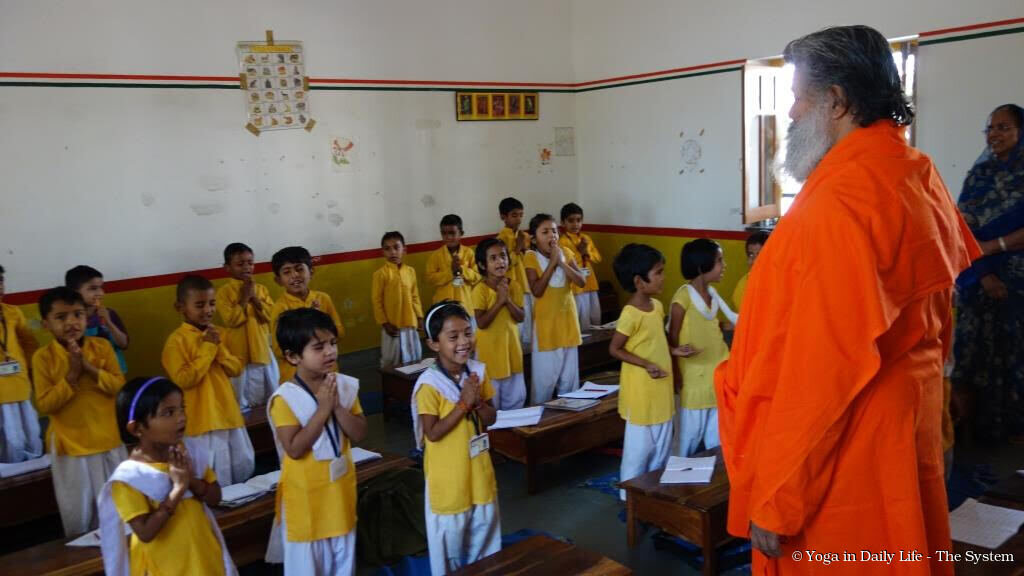
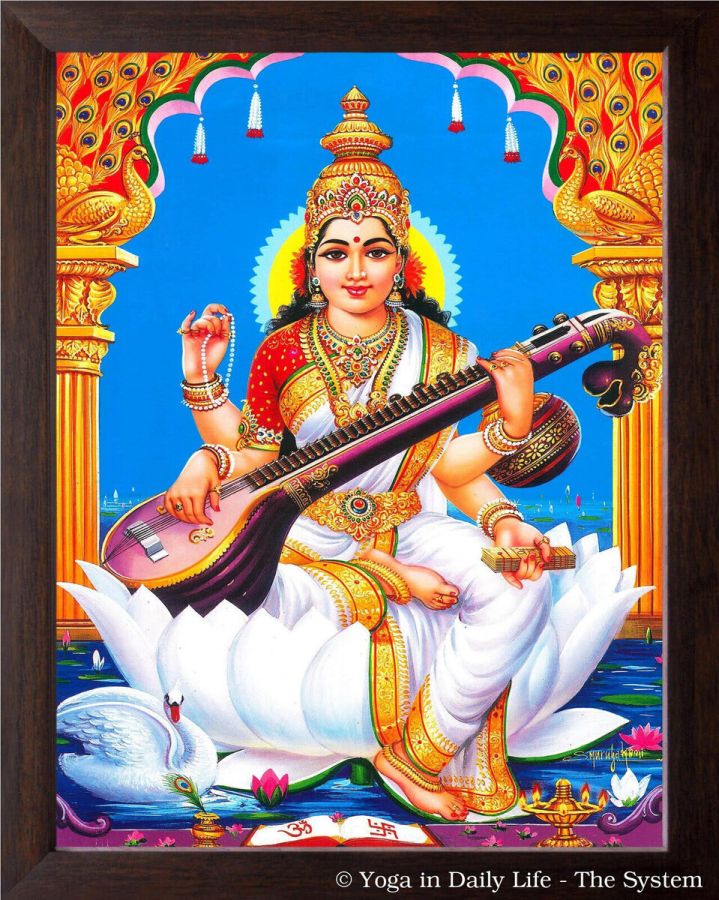
The foundation of Gyana Yoga rests upon four timeless principles: viveka, vairagya, shatsampatti and mumukshtva. These form the inner architecture of spiritual awakening. Yet all four flourish only through bhakti, the sustaining devotion that connects the disciple with the guru.
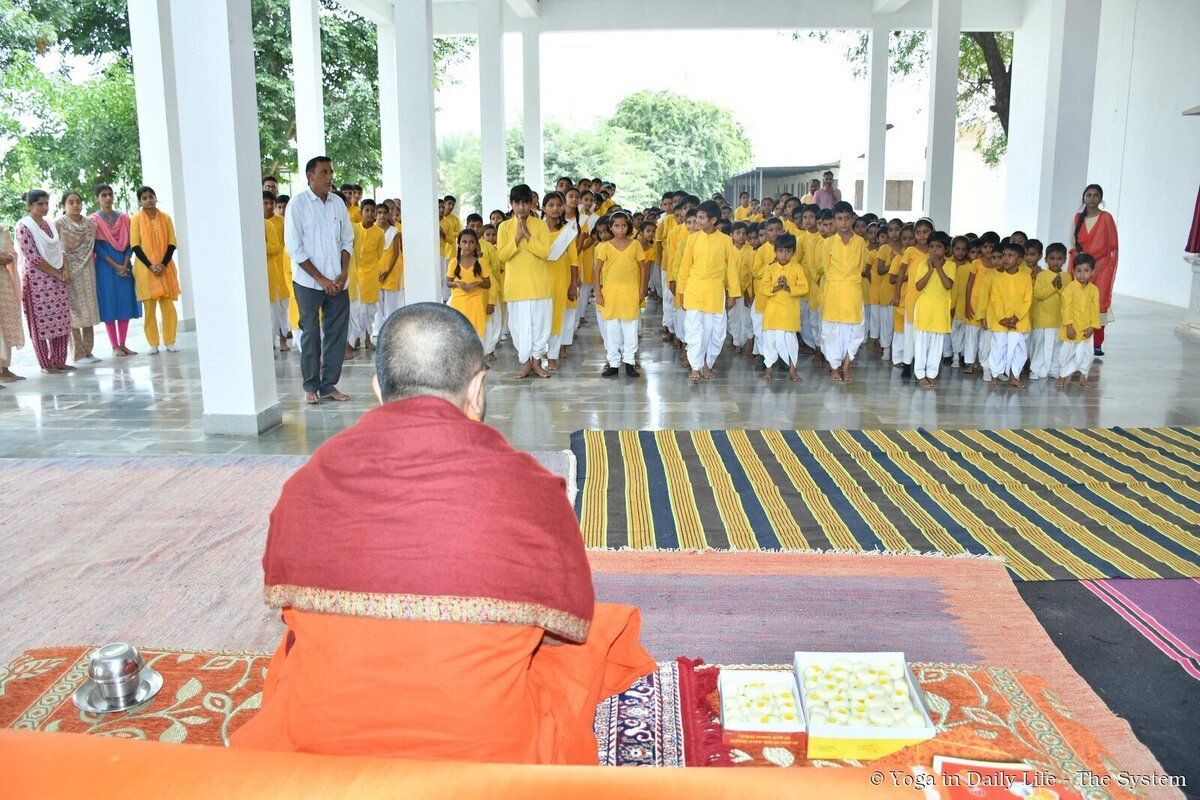
Without the guru’s grace, genuine discrimination, renunciation, discipline, and longing for liberation cannot fully unfold. As the ancient saying goes, guru binā hirade ghor andhakār – without the guru, the heart sinks into darkness.
Just as Śrī Krishna explained to Arjuna in the Bhagavad Gita, even God acts in the world to set an example. In this way, bhakti becomes the living bridge between knowledge and realisation, the force that uplifts theory into experience.
Holy Guruji writes in the Lila Amrit, echoing the teachings of Mahaprabhuji:
“Knowledge is limitless – immerse yourself in it! Life is short, and time passes swiftly, so our experiences are limited. Let the past fade away, and be mindful that this very moment is already slipping into the past. Create your future in the present. Therefore, brothers and sisters, awaken! Remember your duty and fulfil your dharma.”

Viveka: Discrimination
Viveka is the purest expression of knowledge. It is the awakened conscience that discerns truth from illusion, the eternal from the transient. Although the inner voice often guides us toward what is right, the force of egoic desire frequently overwhelms it. Viveka strengthens the seeker’s ability to listen, to choose wisely, and to align life with truth rather than impulse. It is the steady, luminous awareness that illuminates the path of liberation.
Vairagya: Renunciation
Vairagya means inward freedom from desire for worldly enjoyment or possession. The Gyana Yogi realises that all external pleasures are temporary and therefore cannot bring lasting fulfilment. True reality is found only in the atma, the indestructible and unchanging Self. The scriptures compare the Self to space: though walls may divide space into individual rooms, the space itself remains untouched, undivided, and infinite. When the walls fall away, only boundless space remains. In the same way, when ignorance dissolves, the Self stands revealed as one with the infinite.
Shatsampatti: The Six Treasures
Shatsampatti is the practical discipline that stabilises inner growth. It brings together six qualities that refine the mind and prepare it for the experience of truth. Shama is the quiet withdrawal of the senses and mind; while Dama is the conscious control that prevents negative actions and thoughts. Uparati is the ability to rise above disturbances; and Titiksha is the strength to endure difficulties with steadiness and discipline. Shraddha is deep faith in the scriptures and in the words of the Master; and Samadhana is unwavering focus on the spiritual goal. These treasures shape a character capable of realising the highest knowledge.
Mumukshtva: Constant Striving for God
Mumukshtva is the burning inner longing for liberation, the heartfelt desire to realise the Self and unite with God. This yearning propels the seeker beyond intellectual understanding into direct experience. Atma Gyana, knowledge of the Self, is the revelation that we are not separate from God but one with all life. When this realisation dawns, the boundaries of the intellect dissolve, the heart opens, and universal love flows naturally. The seeker understands that harming others ultimately harms oneself, and thus the principle of ahimsa, non-violence, becomes a spontaneous way of living.
In this way, the path of Gyana Yoga unites naturally with the teachings of Bhakti Yoga, Karma Yoga, and Raja Yoga. All paths harmonise in the realisation of oneness.
A story shared by Vishwaguruji reflects the vastness of true knowledge. A philosopher once concluded his life’s work by admitting, “Now I know that I do not know.” Despite immense learning, he still lacked Brahmagyāna, the knowledge of the Absolute.
Even a Rishi, who meditated for millennia and mastered countless scriptures, was reminded by a divine messenger that the dust in his palm represented all he had learned, while the Himalayas symbolised the infinite knowledge yet to be realised. Knowledge is endless, and only humility, devotion, and grace open the gates of true wisdom.